Joy

A map to joy

Soon after we moved to Leiden we went to a party. We talked to different people, one of them was a lovely Dutch artist. She was telling us about a recent visit from her daughter. She told us how she saw her daughter arrive and come through the garden door, then she described very vividly how her heart grew with love and happiness just at the sight of her daughter coming home, to the point where she shed tears of joy. 

At the time The Dutch and I had been together for about three years, so we were nowhere near the thought of having children. But that intensely lovely story stayed with me. 

Around the same time I started meeting with Martine Batchelor, hoping to get over my fear of meditation. Before I moved to Europe, I had some intense experiences during formal sitting meditation, and I was quite afraid to sit and meditate. Martine provided very useful and gentle advice, and soon I was back on the cushion. 

Every time I would meet with Martine she would talk about joy. Joy this, joy that. I had no idea what she was talking about, but I felt I needed to understand what she meant, mostly because she would mention it every time and I wanted to be “a good student”. Weeks and probably months went by and joy was just a mystery thing she talked about often. One day I came across a Buddhist podcast episode about joy. I decided to listen to it because why not. 

Days after that I came home from work, I opened the garden gate while holding my bike with the other hand. It was a late summer afternoon, the sun was warm, and together with the enormous wisteria, cast a pattern of light and shadow across the garden. Gaia, my little Chihuahua dog, came to greet me. She was wagging her tiny tail and seemed so happy to see me. I felt like part of me melted and all there was left was joy. I sat on the garden bench and played with Gaia for some time. We were both delighted to be in each other’s company. 

I don’t remember if I recognized joy during the moment or if the understanding came later. But I definitely remember thinking back that what I encountered was unequivocally joy. Shared joy to be more precise. 

I think the podcast episode described joy in a way that helped me understand it better. I was also carrying within me the story from the Dutch artist, which I believe helped me identify and connect with what was unfolding in the moment. Her precise and vivid description of the inner experience of joy functioned as a map. 

After that it became much easier to join joy in its dwellings. The sunlight, the moonlight, an old friend, a flower, one deep breath, a regular breath. Everywhere I found little puddles of joy. Sometimes for minutes, sometimes for seconds, I can rest in its warmth.

After my son was born, joy was everywhere, and different too: loud, slapstick, spirited joy. But also in calm quiet moments when we were simply happy to be together.

One cold spring, a long-time friend who grew up on Mexico’s Pacific coast came to visit me. She had been living in Germany for the last several years. I took her to the Hortus Botanicus in Leiden. We went straight to the tropical plants section. We entered the large greenhouse with its mature banana trees. Then we climbed a staircase to the small room where the cocoa tree and the giant Victoria amazonica are kept.

As soon as we entered the room, I was brimming with joy, showing her all the flowers, plants, and trees that can be found in Mexico. She shared my enthusiasm, and we kept pointing out recognizable plants as we went around the room. At some point she noticed the quality of the moment and declared, “We are in our habitat.” Such a funny yet accurate description. We were delighted to be together in a warm room with our familiar plant friends.

Joy is so simple and so readily available, yet I had either forgotten or never learned how to recognize it. It took someone to point it out repeatedly, someone to describe it, and someone to map out the inner experience for me to finally see it clearly. Now joy is sometimes in the wind, in my man’s touch, in the moments when my son snuggles up next to me to watch a movie. And of course, in Gaia the Chihuahua.
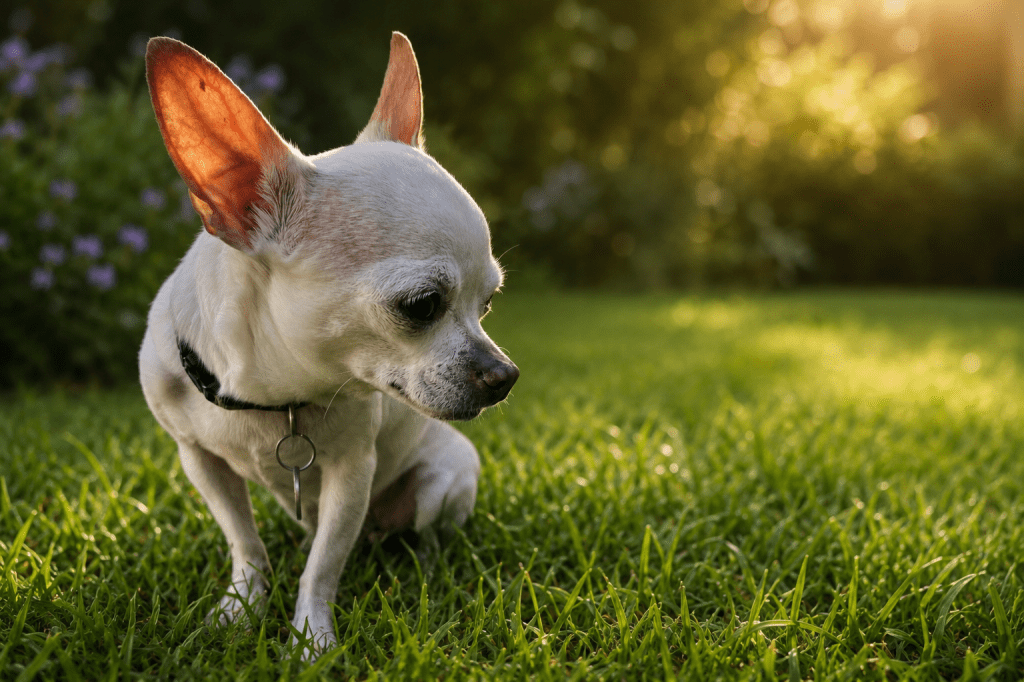
Gaia, she is ten years old now
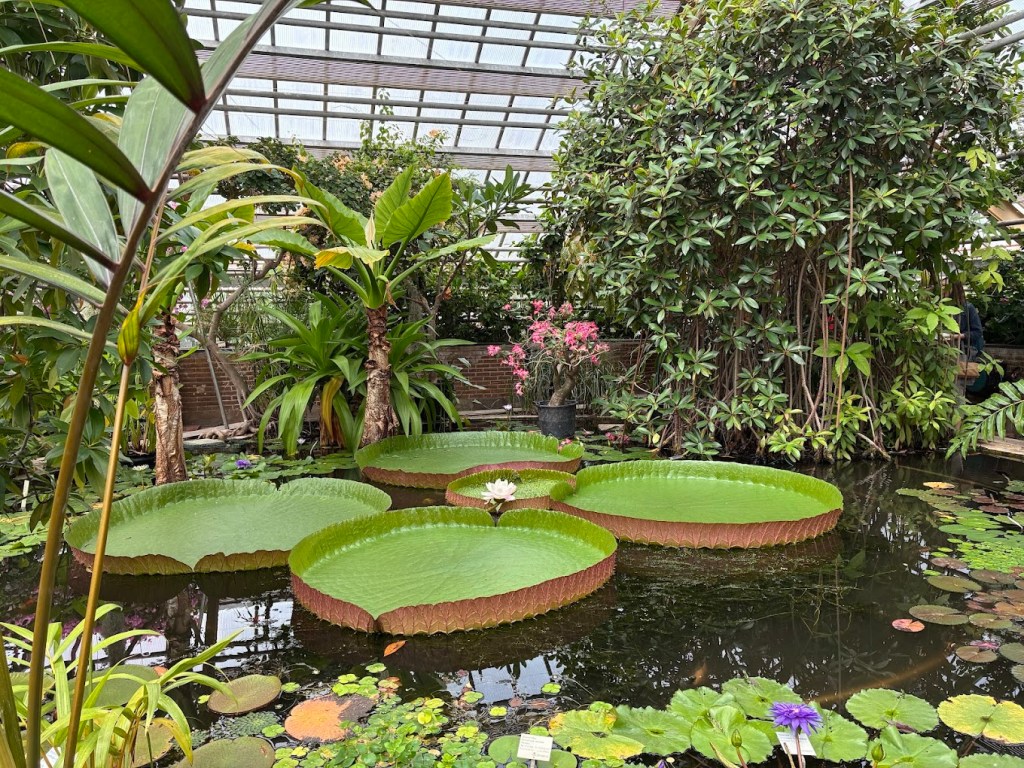
The room my friend described as our habitat.

Photo by Traveler Tina
Amchi

Traditional Tibetan Medicine

In December of last year I went to see an Amchi, or Tibetan doctor. I had been thinking about a system to support my mental and physical health, particularly after some important family losses.

I also feel I am entering middle age, and I want to start thinking about how to take care of my mind and body as I age. Ideally, I wanted to return to a holistic and relational system. When I was in my 20s I started to see a Tibetan doctor, and when I moved to Belgium I quickly found an Amchi in Brussels.

After I moved to The Netherlands, twice per year I would travel from Leiden to Brussels to go see her, but eventually I stopped.

Through a Google search I found a handful of Amchi. One of them engaged my imagination and I decided to make an appointment to go see him. 

The day of the appointment I arrived an hour early. Because it was my first time, I didn’t want to be late. The place was a typical modern Dutch house in a residential area. I knocked on the door and the Amchi let me in. Then he immediately took me to a shed at the back of the house. 

The shed was made into a room for consultations. It was a very small room but quite beautiful, it looked like a mini-Buddhist temple. I immediately felt good and welcomed, it was a nice refuge from the miserable gray day. The Amchi left for a moment and then came back with tea for both of us and started the consultation. I felt bad because I was over an hour early, and when I came in, I could smell lunch was ready.

Because I had seen two Amchi regularly before him, I thought I knew what to expect. But unlike other Amchi, this consultation lasted two hours. He first took my pulse and asked about my life and why I was there. I told him that in the last two years I had a late-term pregnancy loss and that I had also lost both of my parents.

He took his time to talk to me. He talked about kindness and how important it is to be kind to everyone. He talked about gratitude and asked me to make space every day to be grateful. He gave me some breathing exercises and then checked some points around my body. A couple of places were moderately painful, and when he touched one point on my left leg it made me scream in pain. 

And after nearly two hours, when he was finished, he prayed.

My parents had different religions and belief systems, and growing up like that made me non-religious. But both of my parents always prayed for me, and they would mention it sometimes and I would roll my eyes.

Eventually, as I grew older and the years living abroad accumulated, I started to soften to their good wishes and appreciated the ways in which they showed me their love. After their passing, I was surprised to discover I was actually sad no one would pray for me anymore. Even though I don’t believe in a God, it felt like a real loss.

And there was my new Amchi, praying for me.

I thought I was looking for an Amchi but I think I was looking for my dad, his steady gentle advice, his care and love and good wishes.

One of the things that caught my attention most when I was seeing my previous Amchi in Brussels is that she would seem genuinely happy every time I would come back with my health slightly improved. After taking my pulses she would almost jump with joy and run around the room getting pills and powders to prepare my next treatment. I always found that so beautiful. It is rare to find people who can so freely and immediately care.

When I left Amchi’s house I felt I was going back into the world more protected, cared for, even stronger. As the days went by, I felt less fearful, less guarded, my mind more relaxed. Being kind became easier, and finding a moment every day to be grateful became something to look forward to.

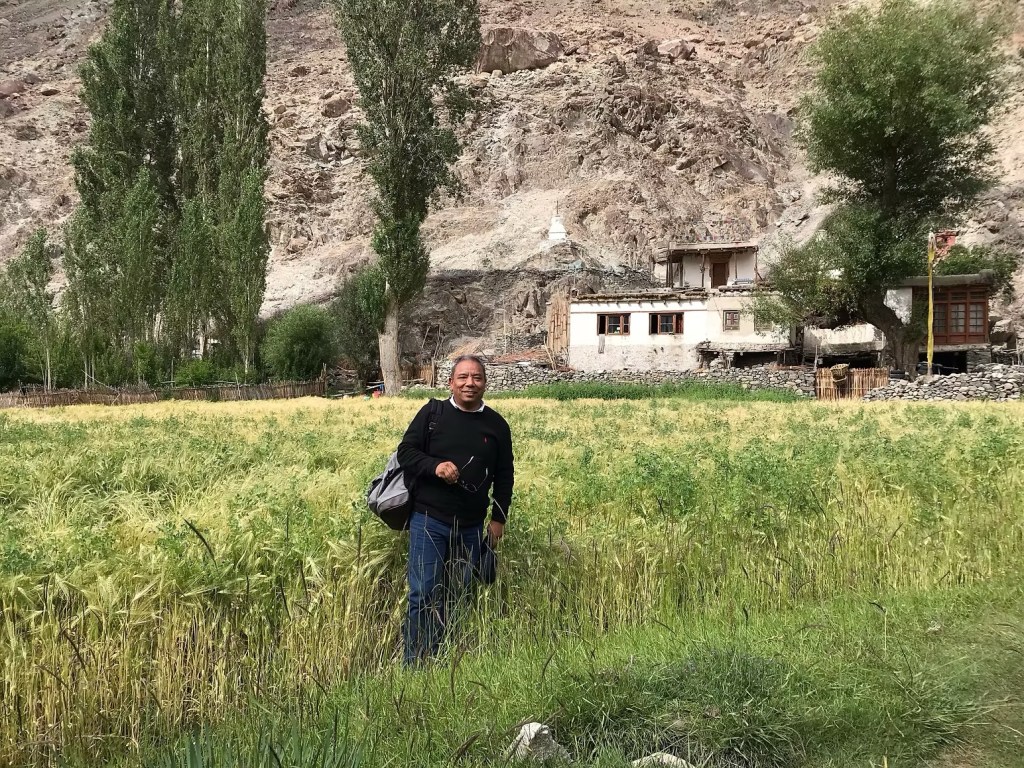
Amchi in one of his travels to Tibet

The Householder

The past several years have been all sorts of intense.

I moved to the Netherlands ten years ago, and my partner (The Dutch) and I had a child five years ago. We live in Leiden and this place has now truly become our home. Since the birth of my son both of my parents have passed away, my dad two years ago and my mom last summer. I formed some precious friendships and others that exist more in the rhythm of my son’s playdates. I took a break from work, and now that our child goes to school, I am slowly finding my way back.

I was pregnant during the hardest coronavirus lockdowns yet I felt fine, safe, collected. My meditation practice had been flourishing before I became pregnant, and it continued to grow during the months preceding my son’s birth. I was leading a daily Social Meditation Zoom practice with local folks, it was beautiful.

After my son’s birth I felt so good, it was like a warm wind carried me everywhere.

With the help of Martine, a dharma friend and guide, I tried to bridge my formal meditation practice with everyday activity. Beyond the famous washing the dishes or doing the laundry mindfully image, I tried to chop wood and carry water with an infant. I had some previous experiences to guide me, or remind me what a state of just being, or just doing felt like.

For a while it was relatively easy to ignore narratives, at least the known ones, and to come back to the breath, or the tiny child, or the warm sun.

But, in my mind at least, the lack of formal practice together with the complexities of life, including those of a foreign mother navigating child-rearing in a different country, started to create a different set of conditions.

As I return to formal practice, I want to write about what being a householder practitioner was and is like for me. There are not many accounts in the Buddhist scriptures about what a householder path looks like. And for some reason, that path has always engaged my imagination.

I find this an important conversation, not only for Buddhist or practitioners within (or without) a tradition, but also for people engaged in other disciplines that require the right intention, gentle discipline and space-time. I think for example, of Ashtanga Yoga, which I practiced in Belgium before I moved to The Netherlands. Maybe, this is something we can figure out this century.

The last turning of the wheel is also driven by householders.

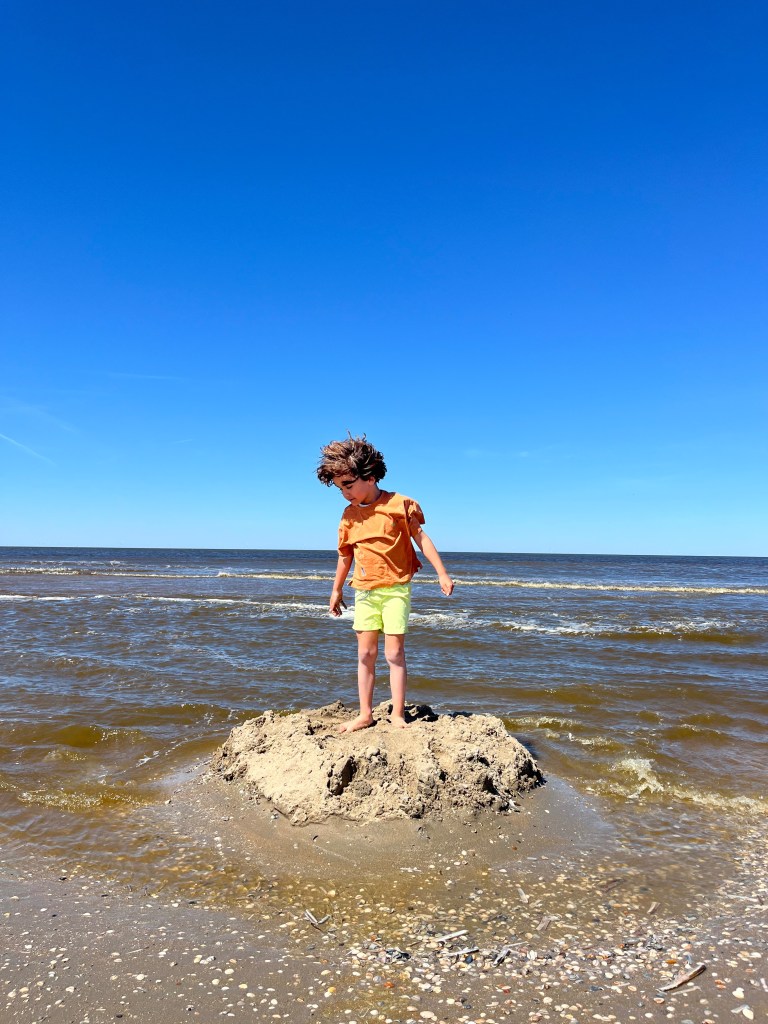
At our favorite place, Katwijk.