On Anger

Anger as a gateway to noticing other emotions

I remember anger. By now we know that our brains are hardly reliable when it comes to memory. The brain reconstructs the past each time we recall it. Moreover, what we perceive in any given moment is shaped by the mental state we bring to it. What follows is a memory already tinted by perception.

So I remember (giggles) that some years ago, at a Delhaize in Belgium, I was walking around the aisles, near the pasta and pasta sauces when a man passed me by and pushed me quite harshly. He didn’t even stop to apologize.

I immediately felt a fire ignite in my belly, oh so powerful. I was indignant, I wanted acknowledgment, an apology, maybe even revenge. I remember observing how powerful I felt, how anger activated me, gave me energy, focus, a goal.

After noticing how I felt, my awareness turned towards the man, and I realized he probably had not, in fact, noticed that he had just pushed me. He was an older man. In my memory, the whole supermarket was vibrant and full of color. I was sharp and bright gliding along the aisles, and the man looked gray and unhappy, dragging his body like a snail towards the vegetable section*.

I remember thinking how seductive the state of anger is. There is no fear, which is nice. It feels activating, also nice. It feels righteous —amazing. A seductive, powerful force. I do not know if anger is as seductive to everyone as it seemed to me that day. But I was very intrigued by what I observed. Perhaps I like anger, perhaps I am even addicted to it, to feeling powerful, energized, righteous. It’s an observation I carried with me for a long time. 

Days later I remember thinking, in comparison, how uninteresting the alternative seemed. The alternative, no reaction or even compassion, was the less familiar path. Anger I knew well, while compassion, or even just understanding was simply less familiar, less rehearsed, not immediately available. They seemed less rich experientially, even boring.

Compassion’s subtlety together with my lack of familiarity made it less readily available. It has taken me much longer to begin appreciating its vastness, its grace, and the freedom it offers.

Anger, so generous in its obviousness, became a guide to other, more subtle and less familiar emotions.

I was very upset this morning. Someone did not show up for an appointment again, and when I texted to check in, my irritation made the response I received sound like an excuse. I noticed my anger rise, I tried to move on but my anger kept rising. Then narratives started to emerge each one making me angrier than the last. For me, narratives function as warning signs, once they start to emerge, it is better to take a step back. Breath. Movement. 

To rest on the rhythm of the breath helps. Stopping for a moment and looking at the other in a neutral way is also helpful. Asking what is this? is particularly insightful. I noticed the physical reactions to anger: slightly warm face, stomach fire slowly rising, growing muscular tension. Since moving on didn’t work, I decided to engage my body and move with purpose, arrange my son’s toys, plant some poppy seeds that just arrived in the mail.

Eventually, understanding arrived. Then the softening of compassion, by now much more familiar. And then the realization that when something is consistently not working, it may simply mean finding a different arrangement.

As for today, I’ll clean the house myself.
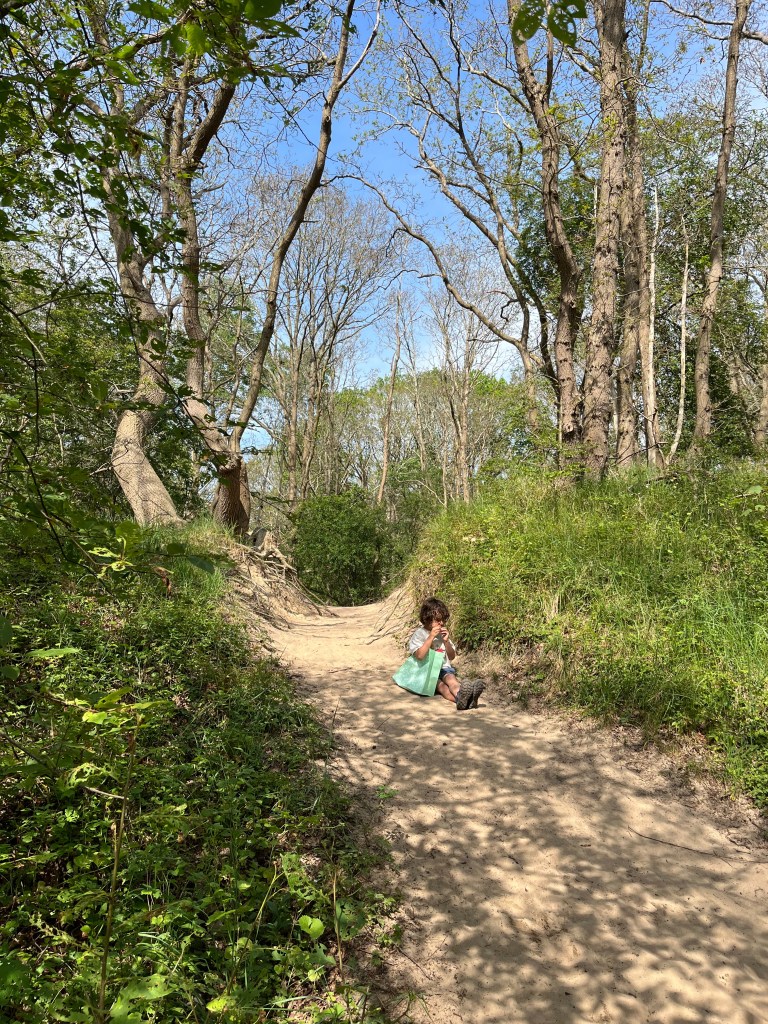
Son eating a boterham (sandwich), completely unbothered, in the Nationaal Park Zuid-Kennemerland, near Haarlem, The Netherlands.

*See more about perception in Buddhism here and mediation instructions related to perception here
Amchi

Traditional Tibetan Medicine

In December of last year I went to see an Amchi, or Tibetan doctor. I had been thinking about a system to support my mental and physical health, particularly after some important family losses.

I also feel I am entering middle age, and I want to start thinking about how to take care of my mind and body as I age. Ideally, I wanted to return to a holistic and relational system. When I was in my 20s I started to see a Tibetan doctor, and when I moved to Belgium I quickly found an Amchi in Brussels.

After I moved to The Netherlands, twice per year I would travel from Leiden to Brussels to go see her, but eventually I stopped.

Through a Google search I found a handful of Amchi. One of them engaged my imagination and I decided to make an appointment to go see him. 

The day of the appointment I arrived an hour early. Because it was my first time, I didn’t want to be late. The place was a typical modern Dutch house in a residential area. I knocked on the door and the Amchi let me in. Then he immediately took me to a shed at the back of the house. 

The shed was made into a room for consultations. It was a very small room but quite beautiful, it looked like a mini-Buddhist temple. I immediately felt good and welcomed, it was a nice refuge from the miserable gray day. The Amchi left for a moment and then came back with tea for both of us and started the consultation. I felt bad because I was over an hour early, and when I came in, I could smell lunch was ready.

Because I had seen two Amchi regularly before him, I thought I knew what to expect. But unlike other Amchi, this consultation lasted two hours. He first took my pulse and asked about my life and why I was there. I told him that in the last two years I had a late-term pregnancy loss and that I had also lost both of my parents.

He took his time to talk to me. He talked about kindness and how important it is to be kind to everyone. He talked about gratitude and asked me to make space every day to be grateful. He gave me some breathing exercises and then checked some points around my body. A couple of places were moderately painful, and when he touched one point on my left leg it made me scream in pain. 

And after nearly two hours, when he was finished, he prayed.

My parents had different religions and belief systems, and growing up like that made me non-religious. But both of my parents always prayed for me, and they would mention it sometimes and I would roll my eyes.

Eventually, as I grew older and the years living abroad accumulated, I started to soften to their good wishes and appreciated the ways in which they showed me their love. After their passing, I was surprised to discover I was actually sad no one would pray for me anymore. Even though I don’t believe in a God, it felt like a real loss.

And there was my new Amchi, praying for me.

I thought I was looking for an Amchi but I think I was looking for my dad, his steady gentle advice, his care and love and good wishes.

One of the things that caught my attention most when I was seeing my previous Amchi in Brussels is that she would seem genuinely happy every time I would come back with my health slightly improved. After taking my pulses she would almost jump with joy and run around the room getting pills and powders to prepare my next treatment. I always found that so beautiful. It is rare to find people who can so freely and immediately care.

When I left Amchi’s house I felt I was going back into the world more protected, cared for, even stronger. As the days went by, I felt less fearful, less guarded, my mind more relaxed. Being kind became easier, and finding a moment every day to be grateful became something to look forward to.

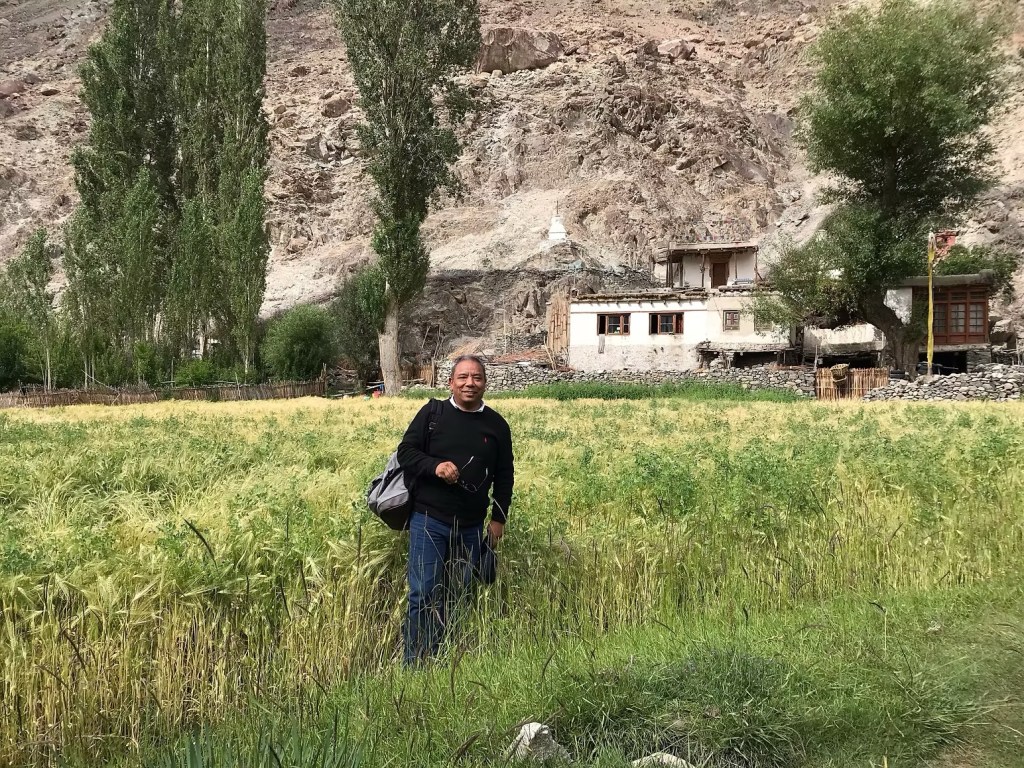
Amchi in one of his travels to Tibet